Seattle has consistently defied expectations. Through interest rate spikes, tech sector turbulence, and post-pandemic migration swings, the Seattle real estate market has remained one of the most resilient in the country. As we look toward 2026, the question isn't whether Seattle will hold its value. It's what shape growth will take, which neighborhoods offer the best opportunity, and what homebuyers and investors need to understand to make smart decisions.
This market update covers where Seattle home prices stand today, what's driving the 2026 forecast, and where to look for value across the region.
Where the Seattle housing market stands today
The Seattle housing market has spent the past two years in a slow reset. After the frenetic pace of 2021, higher rates cooled buyer activity and briefly introduced modest price softening. But that softening was far smaller than many predicted, and it didn't last long.
According to Redfin, the median home price in King County remains well above $800,000, with the Seattle area hovering near $900,000 for single-family homes. Year over year, sale prices have continued to inch upward even as mortgage rates remain elevated. The YoY gains have been modest compared to pandemic-era peaks. Zillow data shows a similar pattern of slow but steady appreciation, and the direction is consistent: Seattle home prices are not correcting in any meaningful way.
The main story is a seller's market operating at reduced volume. Inventory is near historic lows, list prices are holding firm, and closed sales are down simply because fewer people are willing to move. Sellers who have locked in sub-3% mortgage rates aren't trading into a 7% loan without a compelling reason. That lock-in effect is keeping housing supply constrained even as demand continues to build. Last year, King County home sales fell year over year for the third consecutive period, not because buyers disappeared, but because so little was available.
Key drivers of the 2026 outlook
Mortgage rates and affordability
Mortgage rates are the single biggest variable shaping the 2026 forecast. Elevated rates have stretched affordability for middle-income homebuyers in the Seattle area. A home priced at $900,000 with 10% down at 7% carries a monthly payment of roughly $5,400, a real barrier for households without tech-level incomes.
The more encouraging picture is that most economists expect mortgage rates to settle closer to 5.5% to 6% by 2026 as the Federal Reserve continues easing. Even a modest rate reduction meaningfully improves affordability and is expected to release significant pent-up demand. Redfin's chief economist has noted that rate-driven inventory unlocks tend to move quickly. Homebuyers who have been waiting on the sidelines don't take long to act once the math shifts in their favor.
Housing supply constraints
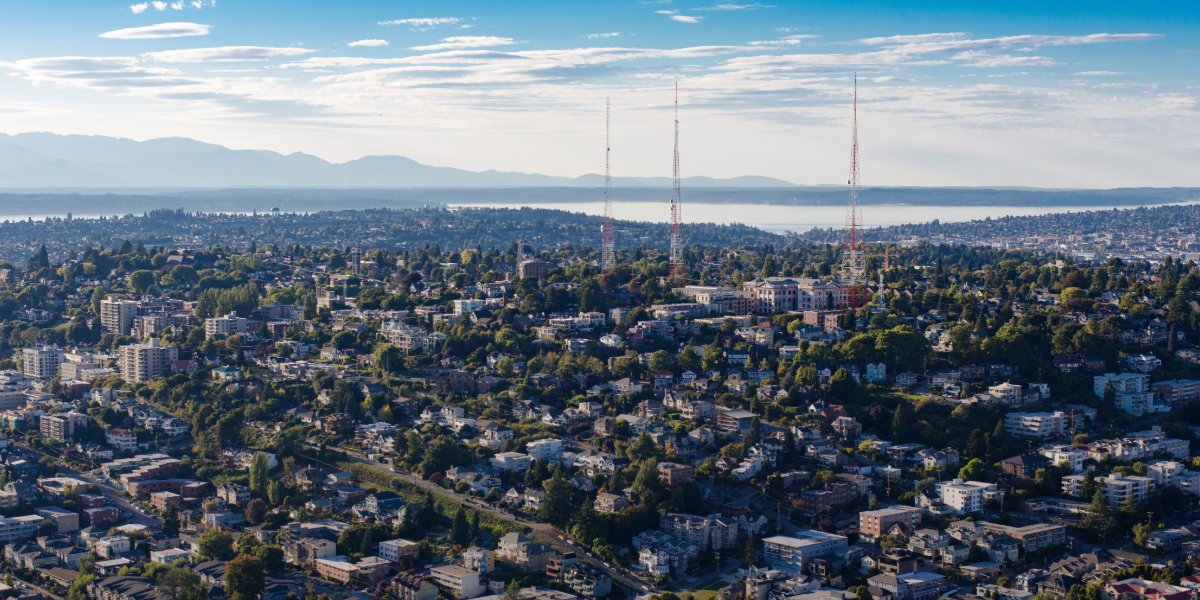
Housing supply is the structural constraint that defines Seattle real estate market trends more than any other factor. The region is geographically boxed in: Puget Sound to the west, Lake Washington to the east, and strict growth boundaries limiting sprawl. New construction cannot keep pace with demand, and existing homeowners have limited incentive to sell at current mortgage rates.
Last year's home sales data confirmed what Seattle area agents have been seeing on the ground: the market is not undersupplied because of weak demand, but because supply simply isn't there. When inventory does loosen, through rate normalization or natural seller turnover, the waiting pool of buyers is ready to absorb it quickly.
Tech economy and in-migration
Seattle's economy remains anchored in technology, and the AI investment cycle is accelerating hiring and office expansion across the region. Return-to-office policies at major employers have reinforced the value of living within commuting distance of South Lake Union and the Eastside, pulling migration patterns back toward the urban core and inner suburbs.
Washington State's lack of income tax continues drawing high earners from California and other high-tax states. Many Bay Area transplants view Seattle home prices as a relative value even at current levels, a dynamic that has kept a consistent floor under the market. As long as Seattle remains a global hub for cloud computing and AI development, that in-migration will continue.
2026 price and market projections
The 2026 Seattle housing market forecast points to steady, sustainable appreciation, not a boom, but not a correction either.
For Seattle home prices, a realistic projection is 4% to 6% annual appreciation through 2026. The median home price in Seattle proper could approach $1,000,000 for single-family homes by 2026, while condos and townhomes are expected to see stronger relative growth as affordability constraints push more buyers toward attached product. Sale price trends across King County suggest the detached home market will remain the tightest segment, with bidding wars returning on well-priced listings as mortgage rates ease.
The risk of meaningful price drops is low given structural supply constraints. The broader Seattle housing market is unlikely to shift to a balanced market in the near term. Luxury condos in oversupplied corridors may see softer asking prices, but that pressure is segment-specific. The overall market update heading into 2026 is one of cautious optimism grounded in durable fundamentals. Seattle remains firmly in seller's market territory.
Seattle neighborhoods to watch in 2026
West Seattle
West Seattle offers some of the most compelling value in the Seattle area. With bridge repairs complete and Light Rail expansion on the way, list prices remain lower per square foot than comparable Seattle neighborhoods, and demand from young families is strong. As transit connectivity improves, the gap between West Seattle pricing and the rest of the city is expected to narrow.
South Seattle: Rainier Beach, Columbia City, and Beacon Hill
South Seattle is the primary destination for first-time buyers priced out of the north end. These neighborhoods offer historic homes, cultural character, and direct rail access. Year over year appreciation here has outpaced several more established Seattle neighborhoods, and that trend looks set to continue as more homebuyers discover the relative value.
Northgate and Shoreline
The Northgate Light Rail station has kicked off a genuine transformation of this corridor. Transit-oriented development is reshaping the neighborhood's character, and Shoreline is benefiting from the spillover. Home values in this submarket have responded to the infrastructure investment, and buyers here are getting ahead of a curve that historically rewards patience.
Ballard and Queen Anne
These established Seattle neighborhoods remain consistently high-demand markets. Sale prices in Ballard and Queen Anne hold firm even during slower market periods, reflecting deep buyer interest in walkable, amenity-rich communities close to downtown. They are reliable markets for long-term homeowners, if not the place to find bargains.
Capitol Hill
Capitol Hill's density, walkability, and proximity to major employers keep it competitive among younger professionals and investors. Condo pricing here reflects the neighborhood's desirability, and its central location makes it resilient across different market cycles.
Bellevue and Bothell
Bellevue functions as a second urban center in its own right, anchored by corporate headquarters and top-rated schools. East Link Light Rail has further integrated it with Seattle, and home values here reflect that premium. Bothell, sitting along the 405 corridor north of Bellevue, offers meaningful affordability by Eastside standards while remaining within commuting range of major tech campuses, making it one of the more underrated markets in the region for long-term homeowners.
Investment considerations for 2026
Long-term appreciation over short-term cash flow
Seattle is an appreciation market. Monthly cash flow on rental properties is often neutral or slightly negative at current pricing given high home values and Washington State's tenant protection framework. Property management costs add further pressure on margins. The return comes from equity growth over time. For investors with a 7- to 10-year horizon, owning in a geographically constrained, high-income market like the Seattle area has historically been one of the more reliable wealth-building strategies available. If you're curious where your current home values stand before making a move, getting an estimate of what your home is worth today is a useful starting point.
The missing middle opportunity
Zoning reform across Washington State has opened new doors for townhomes, duplexes, and ADUs on existing lots. These "missing middle" property types are where investor and first-time homebuyer demand is increasingly converging. Buyers who can navigate the permitting process stand to benefit from a structural shift in how the Seattle housing market grows.
Condos as an entry point
As the median home price for detached homes pushes toward seven figures in many Seattle neighborhoods, condos in the $500,000 to $700,000 range are becoming the primary entry point for first-time buyers. Condo sale prices have lagged single-family appreciation for years, creating relative value in this segment heading into 2026.
Working with a real estate agent in today's market
The 2026 Seattle real estate market will reward preparation and local knowledge. Whether you're a first-time buyer navigating affordability constraints, a homeowner evaluating a move, or an investor tracking market trends across Seattle neighborhoods, the decisions ahead are consequential.
Working with a real estate agent who understands King County pricing, neighborhood-level dynamics, and Washington State's regulatory environment makes a real difference. Every Door Real Estate works with buyers, sellers, and investors throughout the Seattle area and can help you develop a strategy that fits your timeline and goals.
Key takeaways
- Seattle home prices are projected to appreciate 4% to 6% annually through 2026, driven by tight housing supply and strong employer fundamentals.
- Mortgage rates easing toward 5.5% to 6% will improve affordability and likely release pent-up demand from homebuyers who have been waiting.
- The Seattle housing market remains a seller's market. Year over year home sales volume is constrained by low inventory, not weak demand.
- South Seattle, West Seattle, Northgate, and Bothell offer the strongest value relative to growth trajectory.
- Condos represent a growing opportunity as the entry point for buyers priced out of the single-family market.
- Seattle's long-term fundamentals, including geography, employer base, and in-migration, remain among the strongest of any major U.S. housing market.
Check out this article next