If you are thinking about buying a Seattle condo in 2026, you are entering a market that looks meaningfully different from what it was just two or three years ago. The frantic bidding wars have settled. Mortgage rates have stabilized into a range that, while higher than the pandemic lows, is at least predictable. And the Seattle housing market is shifting in ways that create genuine opportunity for prepared buyers.
This market update covers what condo buyers need to understand right now: where prices stand, which Seattle neighborhoods are showing the most activity, how HOA costs factor into affordability, and whether the current market favors buyers or sellers.
Disclaimer: This article is for informational purposes only. Market data and projections reflect general trends in the Seattle real estate market and should not be taken as financial or investment advice. Conditions can change. Work with a licensed real estate agent for guidance specific to your situation.
Where the Seattle housing market stands in 2026
The Seattle real estate market in 2026 is best described as a stabilization cycle. After years of volatility, home prices across King County have settled into slower, more measured growth. That shift is good news for condo buyers who felt priced out or overwhelmed in recent years.
Year-over-year price growth in the condominium segment has moderated compared to the double-digit increases seen during the 2020 to 2022 boom. That moderation, combined with increased new listings coming onto the market from projects that broke ground in 2022 and 2023, means buyers have more options and slightly more negotiating leverage than they did last year.
The broader Washington state housing market is seeing similar trends. Urban cores like Seattle and Bellevue are stabilizing, while some suburban and exurban areas are seeing softening as remote work flexibility decreases and workers return closer to employment centers.
One important caveat: the Seattle condo market does not move as one. Conditions in a newer high-rise in South Lake Union can look very different from a mid-rise building in Ballard or a smaller low-rise in Capitol Hill. Understanding the neighborhood-level picture matters as much as the overall market trends.
Seattle condo prices: what buyers are seeing right now
Condo prices in Seattle vary significantly by location, building age, size, and amenity level. Here is a general picture of where the market sits across key property types and areas.
Urban core and high-rise condominiums in neighborhoods like Denny Triangle, South Lake Union, and First Hill tend to command the highest price per square foot. One-bedroom units in newer buildings have been trading in a range broadly consistent with recent sale price data from King County, which has shown median condo prices hovering in the mid-to-high $500,000s for one-bedroom units and approaching or exceeding $800,000 for two-bedroom configurations, depending on the building.
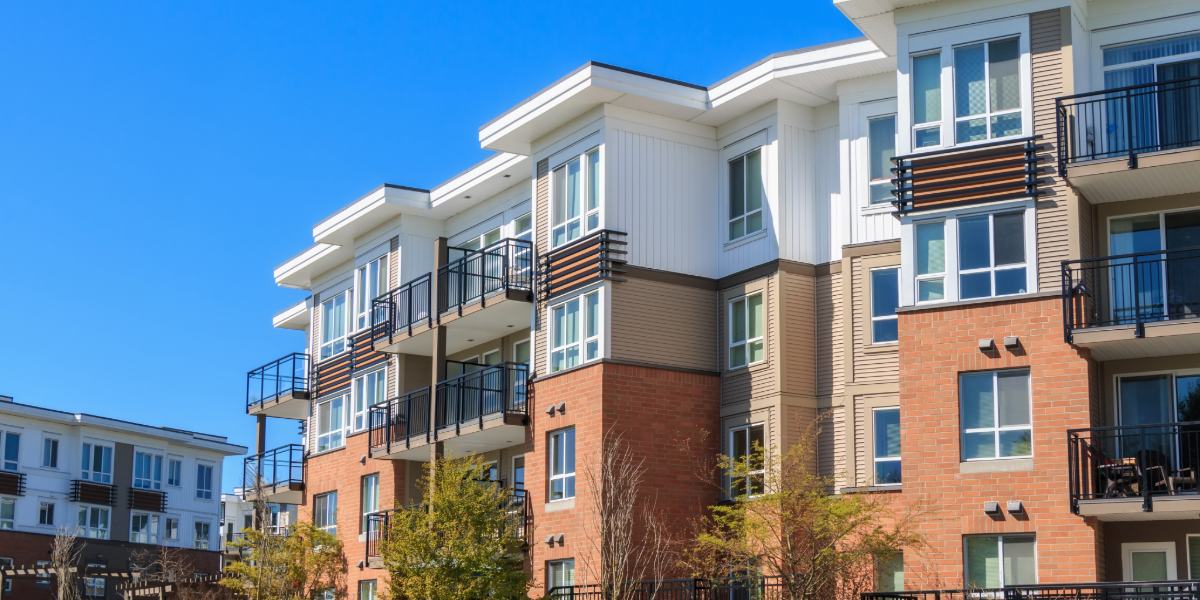
Seattle neighborhood low- and mid-rise condos in areas like Ballard, Capitol Hill, Queen Anne, and West Seattle generally offer more square footage at a lower price per square foot than downtown high-rises. These buildings often appeal to first-time buyers and homebuyers who want urban living with more of a neighborhood feel and better walkability than the downtown core provides.
Bellevue condos have continued to command a premium relative to comparable Seattle home options in many cases, particularly in newer Eastside towers. The gap between Bellevue and Seattle condo prices is a metric worth tracking closely, as it influences where buyers choose to focus their search.
For condo buyers watching affordability, the combination of asking price, HOA fees, and current interest rate levels is the full picture. A lower purchase price with a high monthly HOA can sometimes be more expensive on a cash flow basis than a higher-priced unit with lower monthly costs.
Mortgage rates, interest rates, and affordability in 2026
Mortgage rates remain one of the most watched variables in the Seattle real estate market. After the sharp increases of 2022 and 2023, higher rates cooled demand and pushed some buyers to the sidelines. In 2026, rates have not returned to the sub-3% era, but they have stabilized into a range that most economists consider closer to a long-term normal.
For condo buyers, what matters is not just the rate itself but how it interacts with condo prices and HOA obligations. A few things worth understanding:
- HOA fees directly affect purchasing power. Lenders factor monthly HOA costs into your debt-to-income calculation, which can reduce the loan amount you qualify for. In buildings with higher HOA fees, this is a meaningful affordability constraint.
- Higher rates favor careful comparison shopping. Even a modest difference in rate or loan structure can translate to thousands of dollars over the life of a mortgage. Working with a lender who understands the Seattle condo market, including warrantability requirements for condo buildings, is worth the effort.
- First-time buyers have specific options. Washington State offers down payment assistance programs through the Washington State Housing Finance Commission that are available to eligible first-time buyers. These can improve affordability in a market where upfront costs remain a barrier.
The current market is neither a classic buyer's market nor a classic seller's market in the condominium segment. Inventory has improved from the lows of recent years, giving buyers more options and time to make decisions. But well-priced units in desirable buildings still move with purpose.
HOA fees: the cost buyers often underestimate
For anyone considering a Seattle condo, HOA fees deserve serious attention. Monthly HOA costs vary widely across buildings, from under $400 per month in some smaller buildings to well over $1,000 in larger high-rises with extensive amenities and higher operating costs.
What HOA fees typically cover:
- Building exterior maintenance and repairs
- Common area utilities and cleaning
- Property management costs
- Building insurance (note: this covers the structure, not your personal belongings or interior)
- Reserve fund contributions for major future repairs
In older buildings, underfunded reserves are a known risk. Washington state law requires HOA associations to conduct periodic reserve studies, but enforcement and compliance vary. Buyers should always request the current reserve study, the HOA financial statements, and recent meeting minutes before making an offer on any condominium.
High HOA fees are not automatically a red flag. In a well-run building with strong reserves and good management, those fees represent real value. A building with very low HOA fees but deferred maintenance and an underfunded reserve is often the higher-risk purchase.
Seattle neighborhoods to watch for condo buyers
Each of Seattle's major neighborhoods has a distinct condo market profile.
Ballard continues to attract buyers who want walkability, a strong local food and retail scene, and a mix of newer mid-rise condos and older smaller buildings. Year-over-year price growth here has been relatively stable, and the neighborhood draws both first-time buyers and move-up buyers leaving smaller units elsewhere.
Capitol Hill remains one of the most active condo markets in the city. Its density, transit access, and established urban living culture make it a perennial draw. Resale values here have historically held up well through market cycles.
Queen Anne offers condos with some of the best views in the city and a more residential feel than downtown. It tends to attract homebuyers who want proximity to the core without being in the densest part of it.
West Seattle is often the most discussed affordability play among Seattle neighborhoods for condo buyers. Prices have historically run lower than comparable units closer to downtown, and the neighborhood offers genuine walkability along the California Avenue corridor and access to the waterfront. With improved bridge reliability and ongoing transit planning, the accessibility calculus for West Seattle has shifted in buyers' favor.
Bellevue competes directly with Seattle for certain buyer profiles, particularly those employed on the Eastside. Condo prices in Bellevue's downtown core have at times exceeded comparable Seattle home values, making a direct comparison between the two markets a useful exercise for buyers who have flexibility on which side of the lake they want to live.
Condos as rental properties: what investors should know
For buyers considering a Seattle condo as a rental property, a few important factors shape the investment case.
First, not all buildings allow rentals. Many HOAs cap the percentage of units that can be rented at any given time, and some buildings have owner-occupancy requirements that restrict rental activity. Confirming the building's rental policies before purchase is essential.
Second, property management costs in Seattle have increased alongside rents. Net cash flow on a single condominium after accounting for mortgage, HOA, property management, and vacancy assumptions is often modest, particularly at current interest rate levels. Investors who bought five or more years ago at lower prices and rates are in a very different position than someone buying today.
Third, Seattle has an active regulatory environment around rental properties, including tenant protections and notice requirements that affect how landlords operate. Understanding the current rules before purchasing as an investor is a necessary step, not an afterthought.
How a real estate agent can help condo buyers
Navigating the Seattle condo market involves more than finding a unit you like at a price you can afford. It also means evaluating the building's financial health, understanding the HOA documents, assessing resale potential, and negotiating effectively in a market that varies block by block.
Working with a real estate agent who knows the Seattle real estate market, and specifically the condo segment, makes a real difference in the quality of that process. The team at Every Door Real Estate works with condo buyers across Seattle neighborhoods and the greater Eastside. If you are beginning your search or trying to make sense of what you are seeing in the current market, reaching out is a good starting point.

Key takeaways for Seattle condo buyers in 2026
- The Seattle housing market has stabilized after years of volatility, with year-over-year condo price growth moderating across King County
- Mortgage rates have settled into a more predictable range, but higher rates relative to recent history affect affordability calculations, especially when combined with HOA fees
- HOA fees are a critical variable in any condo purchase and require careful due diligence, including reviewing reserve studies and financials
- Seattle neighborhoods like Ballard, Capitol Hill, Queen Anne, and West Seattle each have distinct condo market dynamics worth understanding separately
- Bellevue continues to command premium pricing compared to many Seattle neighborhoods, creating a cross-lake comparison that is useful for flexible buyers
- Rental properties in condo buildings require additional research into HOA rental caps, property management costs, and Washington state tenant regulations
- First-time buyers should explore Washington State assistance programs that can improve affordability at current price and rate levels
Check out this article next