What should you know before moving to Seattle?
Moving to Seattle means trading dramatic downpours for months of grey drizzle, paying a high cost of living in exchange for no state income tax, and building friendships through shared activities rather than small talk. Most newcomers are surprised that choosing the right neighborhood matters more than square footage, because the city's geography makes commuting difficult.
Quick facts for newcomers:
- Weather: Less annual rain than New York City, but far more overcast days
- Housing: Well above the national average, and the biggest line in most budgets
- Taxes: No state income tax, offset by sales tax above 10%
- Job market: Anchored by the tech industry, aerospace, healthcare, and global trade
- Getting around: Link light rail plus buses; a car is optional in dense neighborhoods
- First 30 days: Get a Washington driver's license and register your vehicle
Embracing the Emerald City
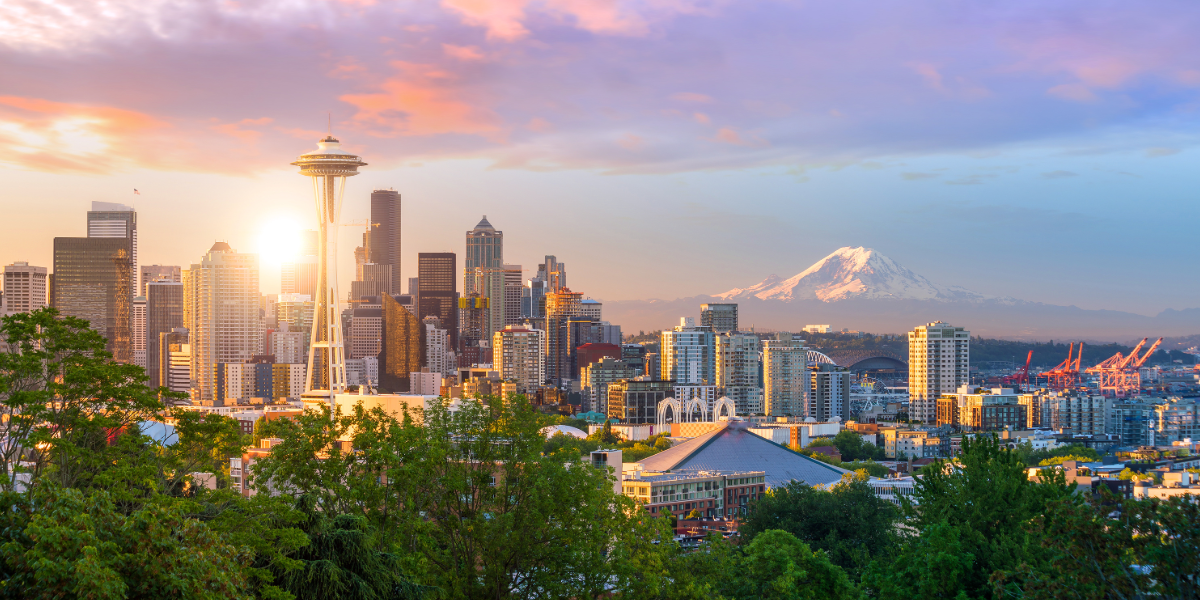
So you have decided to trade your current zip code for the evergreen landscapes of the Pacific Northwest. Seattle feels like a well-kept secret even though it is home to some of the most recognizable brands on the planet. Rugged mountains frame a skyline of gleaming glass, and a high-tech future coexists with a gritty maritime past.
Moving here is not just about changing your address. It is about adopting a specific rhythm of life, one that treats coffee as a food group, hiking as a religion, and "the mountain is out" as a legitimate reason to leave work early. Use this relocation guide to navigate the nuances of the Emerald City so that when you land at Sea-Tac, you are ready.
1. Deciphering the Seattle rain myth
If you have told anyone you are moving to Seattle, they have probably offered condolences about the rain. Here is the first thing to know: the reputation is statistically exaggerated.
It is more mist than monsoon
Seattle receives less annual rainfall than Miami, New York City, or Atlanta. The difference is frequency. Instead of dramatic thunderstorms that clear the air, Seattle specializes in a persistent grey drizzle. From October to May the sky often looks like a wet wool blanket. It does not pour, it mists for days. You will not get soaked in five minutes, but a damp chill can settle into your bones if you are unprepared.
The secret to looking like a local
There is no faster way to signal that you just arrived than carrying an umbrella. Locals rarely use them. Wind off the sound flips a cheap umbrella inside out in seconds, and the mist is usually light enough that a good hood does the job better. Invest in a quality rain shell with a stiff brim instead.
Managing the "Big Dark"
The real challenge is not water, it is darkness. Because the city sits so far north, winter days are short. The sun can set as early as 4:15 PM in December, and cloud cover means you might not see blue sky for three weeks. Locals combat this "Big Dark" with vitamin D, happy lights that mimic sunlight, and a heavy dose of coziness.
2. Choosing among Seattle neighborhoods
Seattle is a city of neighborhoods, and picking the right one shapes your daily life more than any other decision. Each pocket has its own personality, price point, and commute profile.
Inside the city
Capitol Hill is the high-energy heart of the city, dense with nightlife, restaurants, and apartments. Ballard blends Nordic maritime history with breweries and one of the best farmers markets in the region. Fremont, self-declared "Center of the Universe," is quirky and artistic, with a troll under the bridge and a tight pedestrian core. Just west, Queen Anne offers stately homes and the postcard skyline view from Kerry Park.
For buyers seeking relative value, Beacon Hill has become one of the city's most talked-about neighborhoods. Beacon Hill combines quick transit access, genuine diversity, and older housing stock at prices below the north end. Georgetown draws artists and makers to its industrial-chic warehouses, while West Seattle feels like a beach town with skyline views, trading a longer commute for more space.
Downtown and the urban core
Downtown Seattle and neighboring Belltown suit anyone who wants to live without a car, surrounded by restaurants and a short walk from the waterfront. Pioneer Square, the city's oldest neighborhood, pairs red-brick architecture with a growing gallery scene. South Lake Union transformed from warehouses into a corporate campus district and now offers some of the newest apartment towers in the city.
Looking across the water
Plenty of newcomers land on the Eastside instead. Bellevue has evolved into a genuine second downtown with excellent schools and its own rail connection, and Bellevue routinely competes with Seattle for both jobs and buyers. Kirkland offers a walkable waterfront downtown that feels more like a village, and Kirkland tends to attract families who want lake access without big-city density. Farther south, Tacoma delivers the most house per dollar in the metro area.
Sorting through this many options is where local guidance pays off. The team at Every Door Real Estate helps relocating buyers match neighborhoods to their commute, budget, and lifestyle before they ever tour a home.
3. Understanding the cost of living in Seattle
There is no sugarcoating it. The cost of living in Seattle ranks among the highest in the country, and housing drives most of that gap.
When budgeting, look past base rent or list price. Parking is rarely included and can run over $200 a month. Many older buildings lack air conditioning, which recent heat waves have turned into a real consideration. Utilities, higher grocery prices, and that 10%-plus sales tax all add up.
The offset is meaningful: Washington collects no personal income tax, so your take-home pay stretches further than the sticker price suggests. For high earners especially, that trade often works out favorably, though it makes everyday purchases feel pricier.
Why walkability outweighs square footage
A 600-square-foot apartment near a station is often worth more to your quality of life than a 900-square-foot place with a punishing commute. The city is squeezed between Lake Washington and Puget Sound, and that geography creates hard bottlenecks. Being able to walk to a grocery store or catch a train saves hours every week, so prioritize a walkable location over a guest bedroom.
4. Mastering the commute
If Seattleites complain about anything more than weather, it is traffic. The city's hourglass shape funnels north-south traffic through a few arteries, creating legendary gridlock.
The truth about traffic
Interstate 5 and Highway 99 are the main veins of the city, and at rush hour they resemble parking lots. Commuting from the suburbs can double your travel time during peak periods. The "Mercer Mess" near South Lake Union is its own brand of chaos between 4:00 PM and 6:30 PM.
Public transportation that actually works
The good news is that public transportation keeps expanding. The Link light rail is clean, efficient, and runs from the airport through downtown and north through Northgate, with service across the lake. King County Metro runs an extensive bus network, including RapidRide lines that arrive every few minutes. Many employers subsidize an ORCA card, and taking transit usually beats hunting for $30-a-day parking.
Ferries and water taxis
Seattle is one of the few American cities where a boat can be part of your daily commute. Washington State Ferries connect the city to Bainbridge Island and Bremerton. It sounds romantic, and it is, but it demands precise timing. Miss your sailing and you may wait an hour for the next one.
5. Plugging into the job market
The regional economy is a powerhouse, and its gravity touches every industry here.
A genuine tech hub
Amazon reshaped the downtown core into an urban campus for tens of thousands of workers, and Microsoft anchors the Eastside from Redmond. That density made the region a tech hub with a deep bench of startups in software, biotech, and space. Boeing keeps aerospace central to the local identity, and the Port of Seattle ties the job market to global trade. Healthcare is another major employer, with large hospital systems and research institutions hiring constantly.
Education matters too. The University of Washington is one of the country's top public research universities and a major employer in its own right, while Seattle University anchors a smaller private campus on First Hill.
Networking with "quiet ambition"
Unlike the flashier networking of Los Angeles or New York, Seattle favors quiet ambition. People here are talented but understated. Connections form over a pour-over coffee or a weekend hike rather than at a formal gala. The culture is collaborative, but you have to be genuine, because locals spot transactional networking immediately.
6. Decoding the Seattle Freeze
You will hear about the Seattle Freeze within your first week. It describes a local paradox: people are polite and helpful yet hard to truly befriend.
A Seattleite will happily give directions or jump-start your car but might not invite you to dinner for six months. It is not coldness so much as a fierce sense of privacy and a cultural aversion to imposing on others.
To beat the Seattle Freeze, be the initiator, repeatedly. Vague plans die here. Saying "we should grab a beer sometime" guarantees nothing happens. Saying "I'm going to this brewery Thursday at 6, join me" works. Friendships form through shared activities, so join a climbing gym, a run club, or a volunteer crew. Show up consistently and the freeze melts, revealing some of the most loyal friends you will find anywhere.
7. Dressing for four seasons in one day
Function beats fashion here. Weather shifts from sun to mist to wind within a twenty-minute walk.
The unofficial Seattle Tuxedo is a base layer, a flannel or fleece, and a waterproof shell. You will see technical jackets in boardrooms and nice restaurants alike. Do not skimp on the shell, because a cheap water-resistant jacket fails by November; look for something genuinely waterproof and breathable. Footwear matters just as much, which is why so many locals live in waterproof boots. Nothing ruins a day like damp socks at your desk.
8. Living for the outdoors
When sun breaks through, the whole city transforms. Outdoor activities here are less hobby than identity.
Mountains and coast
Seattle sits between two ranges. West, the Olympics offer mossy rainforests and wild coastline, with Olympic National Park within a half-day trip. East, the Cascade mountains deliver skiing and alpine lakes. South, Mount Rainier looms over the skyline like a silent guardian. North, the San Juan Islands make for the quintessential summer weekend by ferry.
Urban green space
You do not have to leave the city for nature. Discovery Park offers miles of bluff trails and a lighthouse over the sound. Green Lake is the city's social loop for runners and walkers. Seattle Center, home to the Space Needle, anchors festivals and museums year-round, and the Washington Park Arboretum feels a world away from downtown.
Water shapes life here too. Summer turns Lake Union thick with kayaks and paddleboards, and catching a Seattle Seahawks game or sailing on Puget Sound at sunset explains the appeal faster than any brochure.
9. Navigating coffee and food
Seattle is food-obsessed but rarely shouts about it. The best meals often hide in unassuming strip malls.
Starbucks started here, and the Capitol Hill roastery is worth a visit, but the real heartbeat is third-wave shops obsessing over bean origin and roast profile. Expect to pay around $6 for a latte and expect it to be excellent.
Seafood is essential: Copper River salmon, Penn Cove mussels, and Dungeness crab. The true signature dish, though, is Seattle-style teriyaki, served at hundreds of family-owned shops. As for Pike Place Market, locals do shop there, just strategically. Go early on a weekday for flowers and produce, skip the Saturday crush, and explore the lower levels most visitors never see.
10. Practical logistics for your first 30 days
Once the truck is unloaded, a few bureaucratic tasks make you official.
Washington requires a state driver's license within 30 days. Consider the Enhanced Driver's License, which lets you cross into Canada without a passport, since Vancouver is only about two and a half hours away. Registering a vehicle can be pricey thanks to the Regional Transit Authority tax that funds rail expansion.
Water, sewer, and garbage run through Seattle Public Utilities, with power from Seattle City Light. Sort out internet early, and grab an ORCA card online or at any station rather than waiting until you are standing at a turnstile.
One more thing that catches newcomers off guard: Seattle takes waste seriously. You will sort trash, recycling, and compost, and putting food scraps in the wrong bin can mean a fine or a skipped pickup.

Finding your rhythm in the Upper Left
Moving to Seattle takes some grit and a lot of Gore-Tex. This is a city that hides its charms behind grey clouds and a reserved exterior, and it rarely reveals them on your first weekend.
Stay, though, and the rewards compound. You will be caught off guard by summer light on the water, by the stillness of a misty hemlock forest, by neighbors who turn out to be lifelong friends. When you are ready to turn a moving plan into an address, the local team at Every Door Real Estate can help you find the neighborhood that fits your life. Take it slow, buy good boots, and look up when the clouds part. The mountain is out, and it is spectacular.
Check out this article next