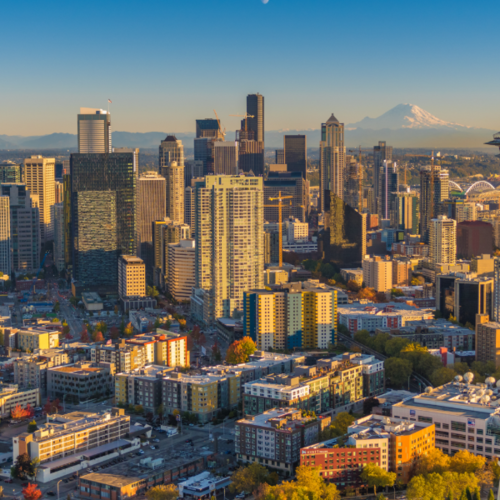
If you are relocating to the Seattle area for a tech role, or you have been here a few years and are finally ready to buy, the local real estate market has some quirks worth understanding before you start making offers. Home prices here are high, competition in the best neighborhoods moves fast, and the way lenders think about tech compensation does not always match the way tech professionals actually get paid.
This guide covers the neighborhoods that tend to work best for tech workers, how to think about affordability when your income includes RSUs, what the commute reality looks like across the region, and how to build a buying strategy that fits the way this market actually works.
Why the Seattle area attracts tech professionals
The Seattle region has become one of the most concentrated tech hubs in the world, and not just because of one or two big names. Amazon, Microsoft, Google, Meta, Apple, T-Mobile, and a growing wave of artificial intelligence companies have all built significant engineering presences here. That density of employers creates a real estate market that stays competitive even when other parts of the country soften.
Compared to San Francisco and Silicon Valley, the Seattle area still offers meaningful advantages on cost of living. The median home price here is high in absolute terms, but it is typically lower than comparable markets in the Bay Area, and Washington state has no income tax, which adds up meaningfully for high earners over time. That combination has made the region a destination for tech professionals relocating from California and other high-cost markets.
The trade-off is that the "affordable" neighborhoods relative to San Francisco are still expensive by most national standards. Understanding where housing costs are most manageable, and what you actually get at each price point, is where the real planning starts.
The Seattle versus Eastside question
The first decision most tech professionals face is whether to buy in Seattle proper or on the Eastside. The answer depends almost entirely on where you work and how you want to spend your time outside of it.
Seattle core neighborhoods
Seattle is a city of distinct neighborhoods, each with a different character and a different price range. For tech workers at Amazon or at Google's South Lake Union campus, buying in the urban core means a short commute measured in light rail stops or walking distance rather than freeway miles.
South Lake Union is almost entirely new construction, with luxury condos and townhomes that appeal to buyers who want minimal maintenance and strong walkability. Capitol Hill, just uphill from South Lake Union, offers more architectural variety, a well-established arts and food scene, and a mix of condos, townhomes, and smaller multifamily property conversions.
Fremont sits slightly further north and has long been a favorite among tech workers who want a neighborhood feel without giving up urban proximity. It sits close to the Lake Washington Ship Canal, has strong local retail along its main commercial streets, and tends to attract buyers who prioritize community alongside convenience.
Ballard is further northwest and has seen significant new construction in the townhomes category over the past decade. It draws buyers who want a denser, walkable environment but prefer slightly lower home prices than South Lake Union or Capitol Hill command.
The Eastside: Bellevue, Redmond, and Kirkland
The Eastside operates as its own real estate market, and for Microsoft employees and those working at the expanding campuses in Bellevue, it is often the more logical choice.
Bellevue has transformed into a genuine urban center over the past decade. Its downtown core now has high-rise condos, walkable retail, and a restaurant scene that rivals Seattle's. Home prices in Bellevue are among the highest in the region, often exceeding Seattle's median home price in comparable neighborhoods. The trade-off is strong schools, newer infrastructure, and direct proximity to Microsoft and a growing cluster of artificial intelligence and cloud computing companies.
Redmond remains the most Microsoft-centric city in the region. Housing there ranges from established single-family neighborhoods to newer townhomes and condos built to absorb demand from employees who want a short commute. Redmond's home prices have risen significantly over the past decade, though they can still offer more square footage per dollar than Bellevue's core.
Kirkland sits between Bellevue and Redmond along the eastern shore of Lake Washington and offers what many tech professionals consider the best balance of lifestyle and commute. Its waterfront downtown, strong school districts, and proximity to both Microsoft and the growing tech presence in Bellevue make it a consistent draw. Home prices in Kirkland are high, particularly near the water, but the neighborhood-level variety means buyers at different budget points can find options.
Bothell, further north, has emerged as a more affordable Eastside alternative. It sits along the SR-522 corridor and has attracted buyers priced out of Kirkland and Redmond. Microsoft and several artificial intelligence and biotech companies have employees who commute from Bothell, and new development has added townhomes and smaller multifamily options alongside the established single-family neighborhoods. Sammamish, to the southeast, draws similar interest from tech professionals seeking newer construction and strong schools at a somewhat lower price point than Bellevue or Kirkland.
How tech compensation affects your buying power
This is one of the most important and most misunderstood parts of buying a home as a tech professional.
Traditional mortgage underwriting is designed around base salary. If a significant portion of your total compensation comes from RSUs, a standard lender may only count your base, which can dramatically understate what you actually earn and what you can realistically afford. The result is a pre-approval letter that does not match your actual financial position.
Lenders who specialize in working with tech clients approach this differently. They review your vesting history, your current grant schedule, and the stability of your equity compensation to calculate a more accurate qualifying income. For buyers whose RSUs represent 30 to 50 percent or more of their annual earnings, this distinction matters enormously.
A few practical considerations:
- Timing your purchase around your vesting schedule can reduce financial stress. Closing a home purchase shortly after a major vesting event gives you liquidity for the down payment without requiring you to sell shares at an inopportune time
- Asset-backed lending allows some buyers to borrow against vested shares to make a stronger offer, sometimes allowing a non-contingent bid without requiring cash on hand
- Mortgage rates affect affordability calculations significantly. At current rate levels, the difference between a 6.5% and a 7.0% rate on a $1.2 million loan is meaningful on a monthly payment basis. Shopping lenders with tech-specific experience is worth the effort
What to look for in a home as a tech professional
Beyond location and price, tech workers tend to prioritize a specific set of features that standard home searches do not always surface clearly.
Internet infrastructure. Fiber availability varies block by block in some older Seattle neighborhoods. Before making an offer, confirm the specific address is serviceable by a fiber provider. For anyone working in DevOps, data science, or video-heavy roles, a symmetric gigabit connection is worth treating as a non-negotiable.
Dedicated workspace. Remote work has made dedicated home office space a genuine requirement rather than a nice-to-have. When touring homes, think about whether the layout supports two separate, sound-insulated work areas if you need them. Finished basements, flex rooms, and bonus spaces above garages are worth evaluating with this use case in mind.
EV charging readiness. Washington state is moving toward stricter zero-emission vehicle standards. A 240V outlet in the garage or a panel with capacity to add one is increasingly a resale consideration, particularly in tech-heavy neighborhoods where EV adoption is high.
Green building standards. The Pacific Northwest leads in green building adoption. Homes with Built Green certifications or newer construction built to current energy codes often have lower utility costs, better insulation, and heat pumps that handle both heating and cooling, which matters as Seattle summers warm.
Navigating a competitive market
The Seattle area real estate market moves quickly in desirable tech corridors. Homes in Kirkland, Redmond, Bellevue, and strong Seattle neighborhoods like Fremont and Ballard can go from new listing to accepted offer in a matter of days during active market periods.
A few strategies that matter in this environment:
Get fully underwritten, not just pre-approved. A full underwrite means a lender has already reviewed your income documentation, tax returns, and asset statements. In a competitive offer situation, a fully underwritten approval letter signals to the seller that your financing is solid, which can be a meaningful differentiator when you are not the highest offer.
Understand escalation clauses. An escalation clause lets you offer a base price with a provision to beat any competing offer up to a defined cap. This is common in Seattle area markets and can help you stay competitive without immediately jumping to your ceiling.
Watch days on market. Homes that have been listed for 21 days or more are often priced above what the market will bear, or they have a presentation issue that a motivated seller may now be willing to negotiate around. These listings can offer more room for inspection contingencies, seller concessions, and price negotiation than freshly listed homes.
Commute realities across the region
The tech corridor between Seattle and Redmond is served by a combination of transit options that are expanding. Sound Transit's light rail extension to the Eastside has improved connectivity significantly, and stations along the route near Bellevue and Redmond have added commute optionality for buyers willing to live near transit.
For ferry commuters, Bainbridge Island and other western Sound communities offer a quiet residential setting with a 35-minute boat ride to downtown Seattle. This option works well for remote work arrangements or roles that do not require daily in-office presence.
Biking remains practical in Seattle proper, particularly along the Burke-Gilman Trail corridor, which connects Fremont, Wallingford, and University District to Lake Washington and beyond. Factoring commute time into your neighborhood decision, particularly if return-to-office policies require frequent in-person days, is worth doing before you buy rather than after.
Working with the right team
Buying in the Seattle area as a tech professional is not a process that benefits from a generic approach. You need a real estate agent who understands how the tech industry's compensation structure affects buying power, which neighborhoods are actually close to your office versus how they appear on a map, and how to move quickly when the right home comes up.
Working with a brokerage that has current market reports and genuine neighborhood-level experience across both Seattle and the Eastside gives you better information at every decision point. The team at Every Door Real Estate works with tech professionals buying across the region and can help you build a strategy that fits your timeline, your compensation structure, and your priorities. Reaching out is a good starting point.
Key takeaways
- The Seattle area has become a top destination for tech professionals relocating from San Francisco and Silicon Valley, offering lower home prices and no state income tax
- Bellevue, Redmond, and Kirkland are the primary Eastside markets, each with distinct character and price ranges. Bothell and Sammamish offer more affordable alternatives
- South Lake Union, Capitol Hill, Fremont, and Ballard are the strongest Seattle neighborhoods for tech workers who want an urban lifestyle and a short commute
- Tech compensation, particularly RSUs, requires lenders who understand how to count equity income accurately
- Remote work flexibility has expanded the viable buying radius, but in-office requirements still make commute time a central factor in neighborhood selection
- Fiber access, dedicated workspace, EV charging, and energy efficiency are worth evaluating specifically as a tech professional

Frequently asked questions
Is Seattle more affordable than San Francisco for tech workers? In most comparisons, yes. The median home price in the Seattle area is typically lower than comparable Bay Area markets, and Washington's lack of state income tax adds meaningful take-home pay for high earners. The cost of living advantage is real, though Seattle home prices are still high in absolute terms.
How do lenders handle RSU income for mortgage qualification? Standard lenders often count only base salary, which understates buying power for tech professionals with significant equity compensation. Lenders who specialize in tech clients review vesting history and current grant schedules to qualify a more accurate income figure. This difference can affect how much home you qualify for substantially.
Should I buy in Seattle or on the Eastside? It depends on where you work and what you value in daily life. Microsoft and many Eastside tech companies make Bellevue, Redmond, or Kirkland the logical choice. Amazon and Google's South Lake Union campus make Seattle's urban core more practical. Hybrid schedules have given some buyers more flexibility to prioritize lifestyle over commute proximity.
What neighborhoods are most affordable for tech professionals in the Seattle area? Bothell and Sammamish on the Eastside typically offer lower entry points than Bellevue and Kirkland while maintaining access to Eastside employers. In Seattle, Ballard and Fremont generally offer more square footage per dollar than South Lake Union or Capitol Hill, though all remain above national median home price benchmarks.
Check out this article next