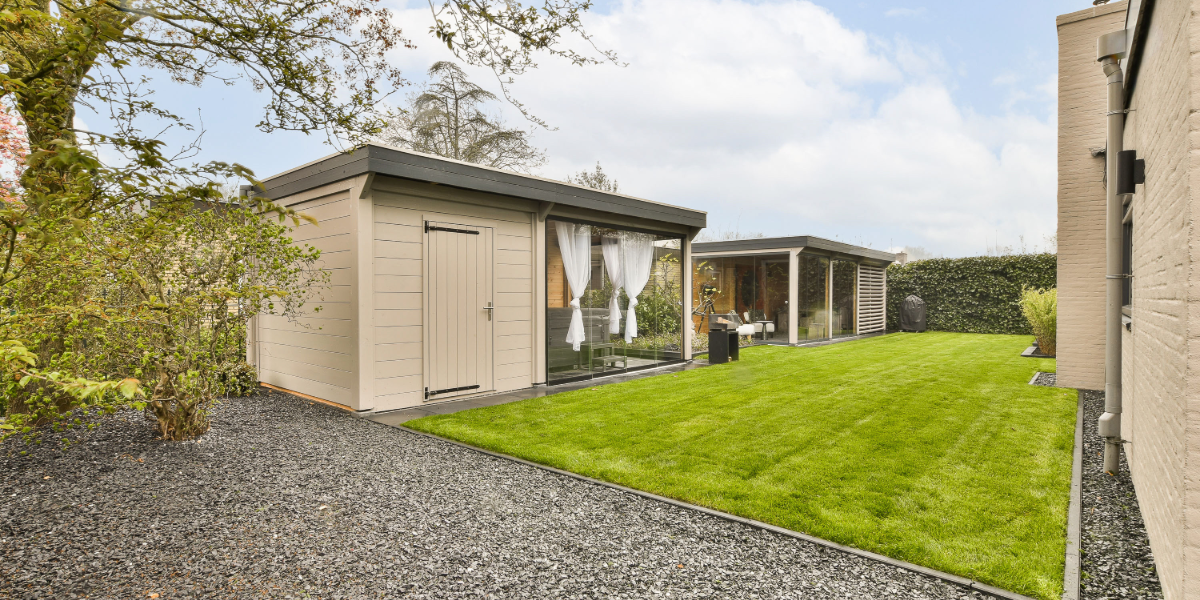
Most homeowners who build a DADU think of it in one of two ways: as a source of rental income or as space for family. Both are solid reasons to build. But, there is a third option that fewer people know about, and it may be the most financially powerful of them all. You can condominiumize your DADU and sell it as a separate piece of real estate.
This means your backyard cottage, which sits on the same single family lot as your primary residence, becomes its own legal unit with its own tax ID, its own deed, and its own spot on the MLS. The main house and the DADU become two independently owned condominium units, like a two-unit building where neither owner shares a wall but both share the land underneath.
This guide explains how the process works in Seattle, what it costs, what the legal requirements are, and whether it makes sense for your situation.
What condominiumizing a DADU actually means
When you condominiumize a property, you are not subdividing the land. The lot stays as one parcel. Instead, you are applying a condominium regime to the structures on that lot, creating two distinct ownership interests: Unit A (typically the main house) and Unit B (the DADU).
Each unit can be bought, sold, and mortgaged independently. The owner of the DADU does not own the dirt beneath their cottage outright. Instead, they own their unit and share an undivided interest in the common elements of the property, which typically includes the land, any shared driveway, utility connections, and other jointly used areas.
This is the same legal framework used for high-rise condominiums, just applied to two small structures on a residential lot. It is sometimes called a unit lot subdivision in Washington state, though the specific terminology and process vary.
Why homeowners pursue this strategy
Unlocking equity without selling
The most common motivation is financial. A Seattle DADU can cost $300,000 or more to build. Selling it as a separate condominium unit allows the original homeowner to recover a significant portion of the construction costs, or monetize equity that has built up in the land itself, without having to sell the primary residence.
For homeowners sitting on substantial property value, condominiumizing the DADU creates a path to convert illiquid equity into cash while staying in the home they want to keep. The ROI calculation here depends on the sale price of the DADU unit relative to total land and construction costs, and it can be compelling in neighborhoods where both structures would command strong prices.
Creating affordable housing in established neighborhoods
On a broader scale, this strategy adds naturally occurring affordable housing to areas where it would not otherwise exist. In Seattle neighborhoods where single-family homes regularly sell above $1 million, a well-built DADU might sell as a condominium unit for $450,000 to $600,000. That price point creates homeownership opportunities for first-time buyers who cannot afford the main house but want to buy, not rent, in that neighborhood.
From a zoning and policy standpoint, the City of Seattle and the SDCI have moved in a direction that increasingly supports this kind of infill ownership. The broader shift away from exclusionary single-family zoning aligns with the idea that a single family lot can support more than one household, including households that own rather than rent.
Flexibility beyond rental income
Most detached accessory dwelling unit owners who want a return on their investment default to long-term rental income or short-term rentals. Both are legitimate strategies. But rental income comes with ongoing management responsibilities, tenant relationships, and regulatory exposure, particularly around Seattle's tenant protections.
Condominiumizing trades a monthly income stream for a lump-sum return. For some homeowners, particularly those approaching retirement or those who built the DADU primarily to cover construction debt, a clean sale is a better outcome than years of landlord obligations.
The step-by-step process in Seattle
Step 1: Confirm eligibility with SDCI
Before spending money on legal or survey work, verify that your property and DADU qualify. The Seattle Department of Construction and Inspections oversees the permitting and land use side of this process. Your DADU must have a valid certificate of occupancy, comply with current building codes, and meet the city's requirements for separate utility service.
Not every Seattle DADU will qualify, particularly older unpermitted structures. The SDCI offers pre-application coaching sessions where you can ask specific questions about your parcel before committing to the process.
Step 2: Hire a licensed surveyor
A condominium conversion requires a formal survey and a condominium map, sometimes called a plat. The survey documents the physical layout of both structures, defines the boundaries of each unit, and identifies the common elements: shared driveways, utility easements, and any outdoor areas assigned to each unit as limited common elements.
The survey is a legal document that gets recorded with the county. Accuracy matters significantly here because it establishes the boundaries of what each future owner is buying and what they share responsibility for maintaining.
Step 3: Draft the condominium declaration and CC&Rs
The condominium declaration is the governing document of your new two-unit community. It establishes the ownership structure, defines each unit's interest in the common elements, and sets the rules for shared responsibilities.
Washington state's Condominium Property Act governs how these documents must be structured. The declaration needs to address questions like: Who is responsible for the shared sewer line? What happens if the DADU's roof needs replacement? Who maintains the shared access path? These details feel minor until a dispute arises, at which point they become essential.
Covenants, Conditions, and Restrictions (CC&Rs) are typically included within or alongside the declaration. They govern things like exterior appearance, parking, and noise in ways that allow two unrelated owners to coexist on the same lot without constant conflict.
This work requires a real estate attorney experienced in Washington condominium law. It is not a task for generic legal templates or a DIY approach.
Step 4: Form the HOA
Every condominium, even a two-unit one, requires a Homeowners Association. The HOA is the legal entity that holds shared insurance, manages any joint maintenance funds, and provides a structure for decision-making when both owners need to agree on something.
For a two-unit Seattle DADU condo, the HOA does not need to be complex or expensive to operate. But it does need to be formally established as a nonprofit corporation, and both unit owners need to understand their obligations under the HOA governing documents before closing.
HOA monthly dues in a small two-unit structure are typically minimal, often just enough to cover shared insurance and set aside modest reserves for common element maintenance.
Step 5: Record the documents and obtain new tax IDs
Once the declaration, survey map, and HOA documents are finalized, they are recorded with the King County Auditor. At that point, the county retires the original parcel number and issues two separate tax IDs, one for each unit. Each unit will receive its own property taxes assessment going forward.
This is the moment the DADU legally becomes a separate piece of real estate. Once recorded, either unit can be listed for sale, financed with a mortgage, or transferred independently of the other.
Practical considerations before you commit
Utility separation
Shared utilities are a significant obstacle to resale. Most buyers, and most lenders, want to see separate meters for electricity and, where possible, water. If your Seattle DADU shares a single utility account with the main house, the cost to separate them should be factored into your ROI analysis before you decide to pursue condominiumization. The SDCI and Seattle City Light both have specific requirements around separate service for independently sold units.
Financing for buyers
Lenders approach small condo projects differently than standard single-family home loans. Some conventional lenders have minimum project size requirements or reserve study requirements that a two-unit DADU condo will need to satisfy. Working with a lender experienced in infill development or small condo financing early in the process helps identify any obstacles before you have a buyer in contract.
Lot size and zoning compatibility
Not every lot is large enough or configured in a way that supports a clean condominiumization. Zoning laws in Seattle affect setbacks, lot coverage, and access requirements that all factor into whether the survey and declaration can be structured in a workable way. Properties in certain overlay zones or with environmentally critical area designations may face additional complexity.
Confirming lot size, existing ADU permits, and current zoning compliance before starting the legal process is time well spent.
Impact on property taxes
Each unit receives its own assessed value after the tax IDs are separated, which means property taxes for each unit are calculated independently. The combined tax burden will typically be higher than what the original single parcel was assessed at, since the county is now assessing two marketable units rather than one. This is worth factoring into your cost analysis, particularly if you plan to hold one unit as a primary residence for an extended period.
Is condominiumizing right for you?
This strategy is not for everyone. It works best for homeowners who have already completed a permitted Seattle DADU, have clear goals around either selling one unit or accessing the equity in their backyard structure, and are prepared to invest in the legal and survey work required to do it correctly.
Multi-generational living situations, where a family wants to formalize separate ownership between a parent and adult child, are another strong use case. Condominiumization allows different family members to hold title independently, access financing separately, and have clear legal ownership of their respective units without requiring a formal lot subdivision.
Working with professionals who understand both the Seattle DADU permitting environment and condominium law is essential. The process involves the SDCI, a licensed surveyor, a real estate attorney, and eventually a lender and a real estate agent who can help position the unit for sale.
The team at Every Door Real Estate has worked with homeowners navigating DADU sales and condominium conversions across Seattle. If you are trying to understand whether this strategy fits your property and your goals, reaching out is a practical first step.
Key takeaways
- Condominiumizing a DADU legally separates your backyard cottage into its own sellable unit without subdividing the land
- The process involves a licensed survey, a condominium declaration drafted under Washington's Condominium Property Act, HOA formation, and recording with King County
- SDCI must confirm your DADU's eligibility, including permit status and building code compliance, before the process begins
- Separate utility meters, clear shared access, and a well-drafted declaration are essential for successful resale
- The strategy allows homeowners to recover construction costs, unlock equity, or create homeownership opportunities for buyers in neighborhoods where standalone homes are out of reach
- Property taxes, HOA structure, and lender requirements for small condo projects all factor into whether the numbers make sense for your situation

Frequently asked questions
Do I need to live in the main house to condominiumize my DADU? No. Washington state's Condominium Property Act does not require owner-occupancy for condominiumization. However, local zoning laws and your original ADU permit conditions may include requirements worth verifying with the SDCI before proceeding.
How long does the condominiumization process take in Seattle? Timelines vary depending on SDCI review queues, attorney availability, and how quickly the survey and declaration can be finalized and recorded. A realistic estimate for a straightforward project is six to twelve months from start to recorded documents.
Can I rent out the DADU instead of selling it after condominiumizing? Yes. Converting to a condominium structure does not require you to sell the unit. You could hold it as a rental unit or short-term rentals if local zoning allows, and sell it later. The legal structure simply gives you the option to sell independently when you choose to.
What is the difference between condominiumizing a DADU and a unit lot subdivision? These terms are sometimes used interchangeably but can refer to slightly different legal processes depending on how the city and county handle the application. A real estate attorney familiar with Seattle's current SDCI requirements can clarify which approach applies to your specific property.
Check out this article next